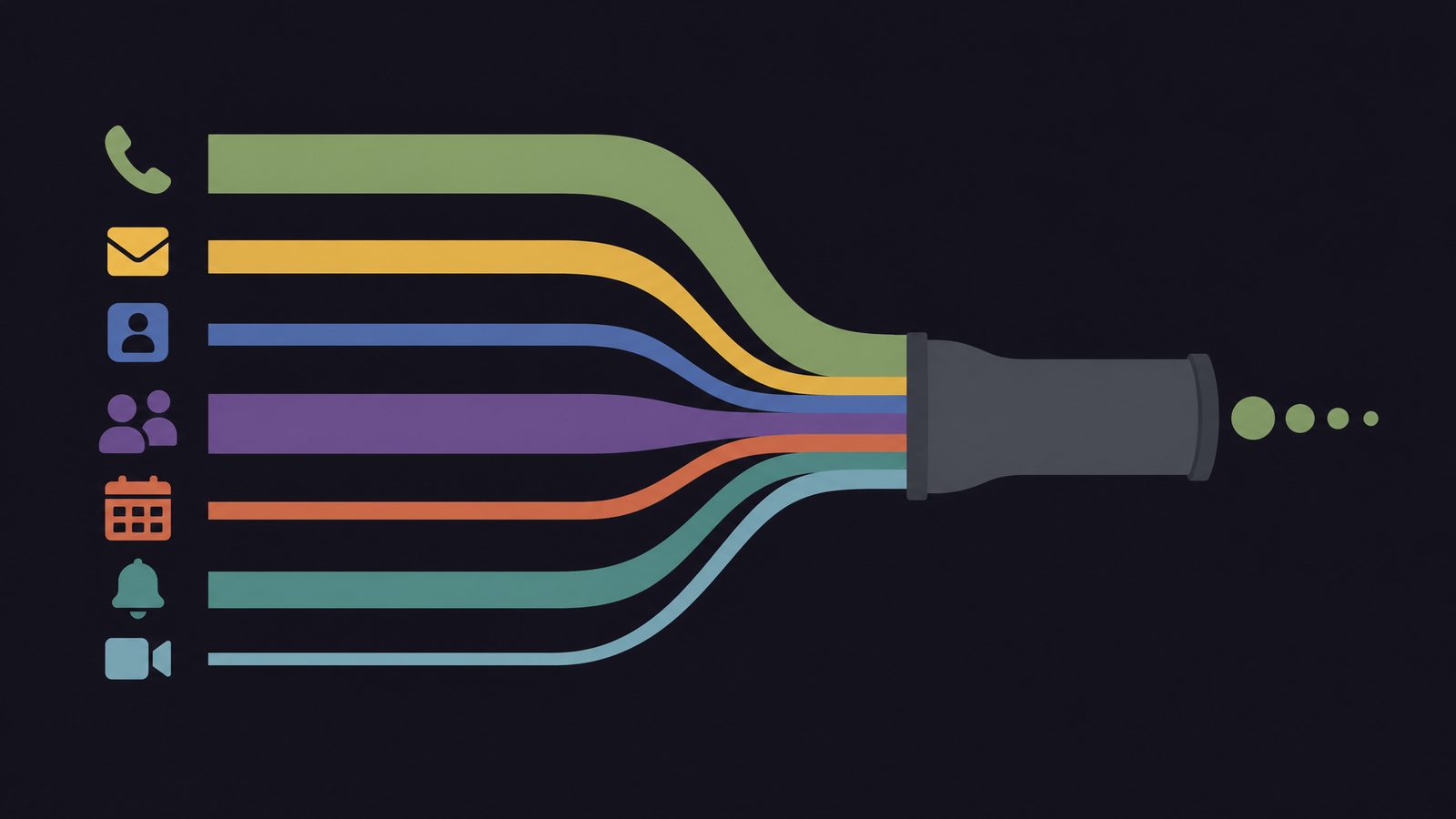
There are seven prospecting methods a B2B rep actually has at their disposal: cold calling, email, LinkedIn, referrals, events, trigger-based outreach, and video. Every one of them works, and every one of them fails when the targeting and the message are wrong. The question is not which channel is dead, it is what mix of methods gets you in front of the right person with a reason to care, and the only way to answer that is to run the numbers for your own market.
TL;DR: The prospecting methods available to a B2B rep are the phone, email, LinkedIn, referrals, events, trigger-based outreach, and video. None of them are dead and none of them work alone. The right approach is to run each one long enough to get your own response rate data, then build a mix weighted toward what works for your market, your deal size, and your buyer.
What are the main prospecting methods in B2B sales?
Prospecting methods are the channels and approaches you use to start a conversation with someone who has not raised their hand yet. Most reps default to one or two because that is what their sequence tool spits out, then spend their time arguing online about whether the phone still works instead of testing it.
Here is the full set you have to work with, and what each one is genuinely good for.
- Cold calling: the fastest way to get a real reaction and a real conversation. Nothing else gives you the same immediate feedback on whether your message lands.
- Email: the highest-volume method and the easiest to scale, which is exactly why it is the most abused. Good for giving someone something to react to on their own time.
- LinkedIn and InMail: strong when your buyer lives on the platform and you have done the research to reference something specific they posted or did.
- Referrals and introductions: the highest conversion rate of any method, because the trust is borrowed before you say a word.
- Events: in person time compresses a relationship faster than any sequence. Best used for the follow-up you plan before you go, not the badge scan.
- Trigger-based outreach: funding, leadership changes, product launches, hiring patterns. The trigger gives you the one thing most outreach lacks, which is a reason for reaching out right now.
- Video: useful when you need to show something rather than describe it, or when you want to stand out in a crowded inbox for an account worth the effort.
Which prospecting method is the most effective?
The honest answer is that it depends on your deal size, your buyer, and your message, and that the only way to know is to measure it. I ran this on my own business. I did 100 emails, 100 cold calls, and 100 InMails and tracked which one actually produced people saying yes, let's have a conversation.
For me, at a $25,000 ACV, email came in around a 7% response rate, cold calling around 3%, and InMail around 10%. So my mix is roughly 60% email, 10% phone, and 30% InMail. That is my mix, not yours. If you sell a $200,000 platform to operations leaders who never open LinkedIn, your numbers will look completely different.
From there I keep tracking the whole chain. About 63% of those conversations turn into deeper discovery calls, 49% of those turn into proposals, and I close about 32% of those. Once you know those numbers, prospecting stops being a mood and starts being math.
Why is arguing about whether cold calling is dead a waste of time?
Cold calling still works. I have been saying this for 25 years and I will keep saying it, because the data backs it up. The reps who tell me it does not work are almost always the ones making generic, unprepared calls and blaming the channel when those calls fail.
The same thing is true of email and LinkedIn. When someone tells me email is dead, what they usually mean is that the template they copied from a newsletter stopped working. The channel is the delivery mechanism. The message and the targeting are what determine whether anyone responds, and no channel can save a bad message.
If you want the detail on how to run the calls and write the messages themselves, we have posts on both. This one is about choosing what combination to run in the first place.
How do you build a prospecting mix instead of picking one channel?
Most reps approach prospecting account by account and touch by touch. They spend 30 minutes researching a company, write one email, send it, and move on. That is the slowest, least effective way to do it.
What I do instead is batch the research. I will pick an account, spend 30 minutes on them, but instead of looking for one thing to say, I find five, six, seven, eight things I could reach out about. Then I take a step back and figure out how I am going to tell my story across those touches. What is the first touch, what is the second, what content do I share on the third, where does the phone come in, where does the video make sense.
Then I put that whole thing into a system and let it run. You have built a campaign for that account with multiple methods doing different jobs, rather than firing off a template and hoping.
What makes any prospecting method actually convert?
Your number one competitive differentiator when prospecting is the results you drive for your customers. Not your features, not your funding round, not your clever subject line. Case studies are my favorite way of selling, because I can say we showed this company in your industry how to drive these kinds of results, and here is what they saw.
That works on the phone, it works in email, it works in an InMail and it works on video. The method changes, the proof does not. If you do not have case studies or results you can speak to, go get them before you worry about which channel to use.
One warning. Never tell a prospect you can get them results. Tell them what results other people like them have already seen. There is a big difference between a promise and a proof point, and buyers hear it immediately.
How does AI change prospecting methods?
AI makes the research step dramatically faster. What used to take 30 minutes per account can take a few minutes, which means you can cover more accounts with the same depth, or go deeper on the accounts that matter most.
What it does not do is decide who you should be targeting, why now is the right moment, or what your buyer actually cares about. Those are judgment calls, and reps who skip them now produce bad outreach faster than they used to. That is the real risk of AI in prospecting, scaling mediocrity.
Use AI as a force multiplier on the research and the first draft, then apply the fundamentals on top. The methods have not changed. The speed at which you can execute them has.
The JB Sales Approach
If you take one thing from this, make it the testing. Pick your three most likely methods, run meaningful volume on each, and track response rates. Opinions about channels are everywhere. Your own numbers are the only ones that should drive your mix.
Everything else follows from that. Targeting determines whether the method has a chance, the message determines whether it converts, and your results and case studies are what make the message credible in any channel.
- Choose one account this week and find eight reasons to reach out instead of one.
- Map those reasons across a multi-touch, multi-method sequence before you send anything.
- Log every response by method so you have data to make decisions with next month.
What to do first this week
Open a spreadsheet and start tracking response rate by prospecting method. Three columns, calls, emails, and LinkedIn, and one row per week. You need your own version of my 7%, 3%, and 10% before you can build a mix that makes sense. Most reps have never done this, which is why most prospecting conversations are opinion instead of math.
At the same time, pick one target account and do the 30 minute research block the way I described it. Find eight things you could reach out about, then build a sequence that tells a story across the phone, email, and LinkedIn instead of repeating the same ask three times.
If you are a sales leader looking at your team's prospecting numbers and wondering whether the problem is the people, the process, or the tools, start with the replace, rebuild, or retrain framework at learn.jbarrows.com/pages/replace-or-rebuild. If the answer is retrain, Filling the Funnel and Driving to Close are structured team training programs that integrate AI into a fundamentals-first workflow, at learn.jbarrows.com/pages/team-training-packages. JB Sales Advisory is a 3-month strategic engagement that starts with a written diagnostic of your sales motion, AI readiness, and team structure and ends with a 90-day plan you can execute, at learn.jbarrows.com/pages/advisory. For individual reps who want direct access to me, the individual packages are at learn.jbarrows.com/pages/individual-packages.
Frequently asked questions
What are the best prospecting methods for B2B sales?
The methods available are cold calling, email, LinkedIn, referrals, events, trigger-based outreach, and video. The best ones for you depend on your deal size and where your buyer actually spends time, which is why you need to run each method and track your own response rates rather than taking anyone's word for it.
How many prospecting methods should I use at once?
Most reps should be running at least three in combination, typically phone, email, and LinkedIn, with referrals and trigger-based outreach layered in where they apply. A single-channel approach gives you no backup when one method stops working for a particular buyer.
Is cold calling still an effective prospecting method?
Yes. A targeted call, to the right person, with a specific reason for calling still converts. The reps who say it does not work are usually making generic, unprepared calls and blaming the channel instead of the message.
How do I know which prospecting method is working best?
Run meaningful volume on each one and count the responses that turn into real conversations. Then track that chain all the way through to discovery calls, proposals, and closed deals, because a method with a high reply rate but poor downstream conversion is not actually your best method.
Does AI replace traditional prospecting methods?
No. AI compresses the research and drafting work, which lets you prospect more accounts at the same depth. It does not decide who to target or why now, so reps without strong fundamentals just send bad outreach faster.